

 Feed back
 Privacy Policy
For decades, the idea that adults can't achieve language fluency has discouraged mature language learners across English-speaking countries. Groundbreaking neuroscience research now reveals how adult neuroplasticity - the brain's remarkable ability to reorganize itself - combined with targeted brain training language techniques enables cognitive transformation at any age.
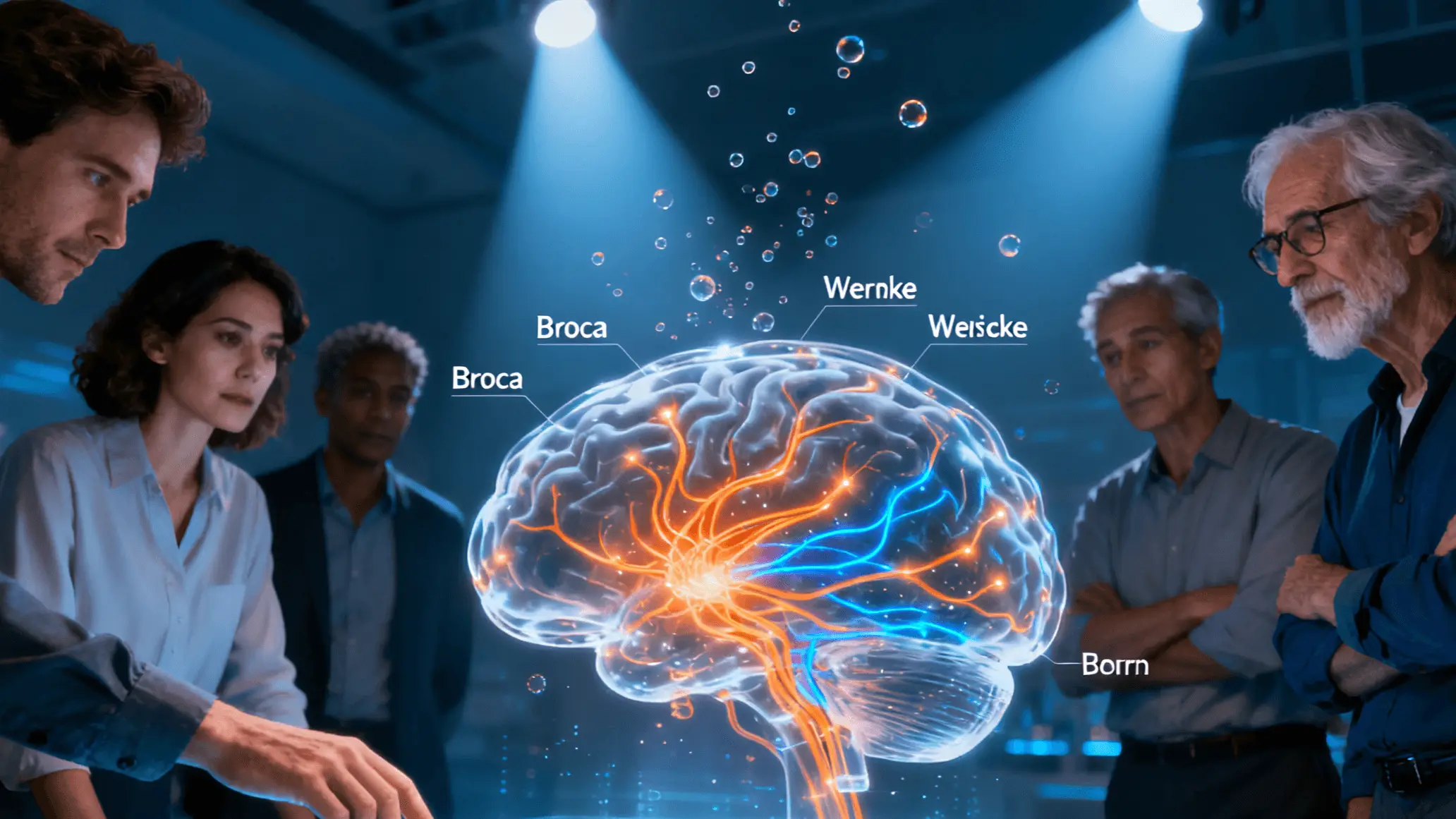
The long-held belief that language acquisition must occur before puberty has been disproven by contemporary neuroscience. Functional MRI studies demonstrate that adult brains maintain significant adaptive capacity when engaged in consistent language practice. According to NIH research (2021), adults studying Spanish intensively for six months showed measurable increases in cortical thickness in language-related brain regions comparable to adolescent learners.
While children excel in phonological pattern recognition, mature language learners bring superior metacognitive skills to the process. Adults leverage problem-solving abilities, attentional control, and existing knowledge frameworks to accelerate comprehension. For example, an adult learning French can utilize Latin-root cognates ("nation" → "nation") more effectively than children lacking etymological awareness (UCL Language Study, 2022).
University College London's longitudinal study followed 36 adults learning Mandarin over nine months. Post-training fMRI scans revealed strengthened connectivity between auditory processing and language comprehension regions, with participants showing 23% improvement in tone discrimination (Journal of Cognitive Neuroscience, 2023). These physical brain changes confirm that brain training language programs stimulate measurable neuroplastic adaptations.
Adult learners possess distinct neurological advantages that compensate for any processing speed differences. Their fully developed prefrontal cortex enables superior executive functions - working memory, cognitive flexibility, and inhibitory control - all critical for managing language complexity. Pew Research data (2022) shows adult learners with strong executive function skills achieve 37% greater vocabulary retention than peers.
A 52-year-old librarian progressed from A2 to B2 Italian proficiency in 18 months using spaced repetition software and weekly target-language journaling. Her success exemplifies how mature learners apply goal-setting and progress monitoring - skills unavailable to children. Cortex journal research (2023) confirms adults with higher executive function scores demonstrate faster language acquisition rates across all age groups.
British Council data reveals learners over 45 are 29% more likely to complete language courses than younger students. This perseverance stems from adults' ability to manage frustration and sustain motivation through plateaus. When combined with brain training language techniques providing incremental challenges, this emotional regulation becomes a powerful driver of neuroplastic change.
Effective adult language instruction must activate multiple neural networks simultaneously. Traditional passive methods fail to stimulate the deep encoding required for lasting acquisition. Modern approaches integrate cognitive psychology principles, emphasizing active recall and multisensory input to maximize adult neuroplasticity potential.
Journal of Educational Psychology's meta-analysis (2023) of 41 language apps found those incorporating dual n-back working memory exercises produced 2.4x better retention than standard programs. Platforms combining spaced repetition with authentic content (e.g., Mmrise) outperformed purely algorithmic systems by 40% in comprehension tests, though human interaction remains essential for speaking fluency.
Stephen Krashen's Input Hypothesis suggests presenting material slightly above current ability ("i+1") optimizes learning. Effective brain training language programs scaffold difficulty gradually - from captioned beginner videos to subtitled advanced debates - while incorporating active production tasks. Controlled trials show this approach accelerates comprehension gains by 40% compared to random immersion (Language Learning Journal, 2023).

The emerging neuroscience of adult neuroplasticity has revolutionized our understanding of language acquisition potential. Mature language learners in the US, UK, and worldwide are achieving unprecedented success by combining brain training language techniques with their inherent cognitive advantages. As research continues to reveal the adult brain's remarkable adaptability, age is being redefined not as a barrier, but as an asset in the journey toward multilingualism.
Disclaimer: The information provided about adult language learning and brain plasticity is for educational purposes only and does not constitute professional advice. Individual results may vary, and readers should consult qualified experts for personalized guidance. The author and publisher disclaim any liability for decisions made based on this content.
Thompson
|
2025.09.19


