

 Feed back
 Privacy Policy
Millions of English learners around the world spend years studying grammar, vocabulary, and listening comprehension, yet still struggle to engage in real-life conversations. This disconnect between academic learning and real-life language use is a common pain point. Many learners find themselves unable to speak confidently in spontaneous situations, even after passing standardized tests. The truth is, mastering conversational English requires more than passive learning—it demands active, consistent practice.
This is where daily speaking practice becomes a game-changer. By integrating short, focused speaking sessions into your daily routine, you can bridge the gap between textbook knowledge and natural communication. In this article, we'll explore how to apply effective conversational English tips, why daily speaking practice is essential for building English fluency, and how you can start speaking confidently today.
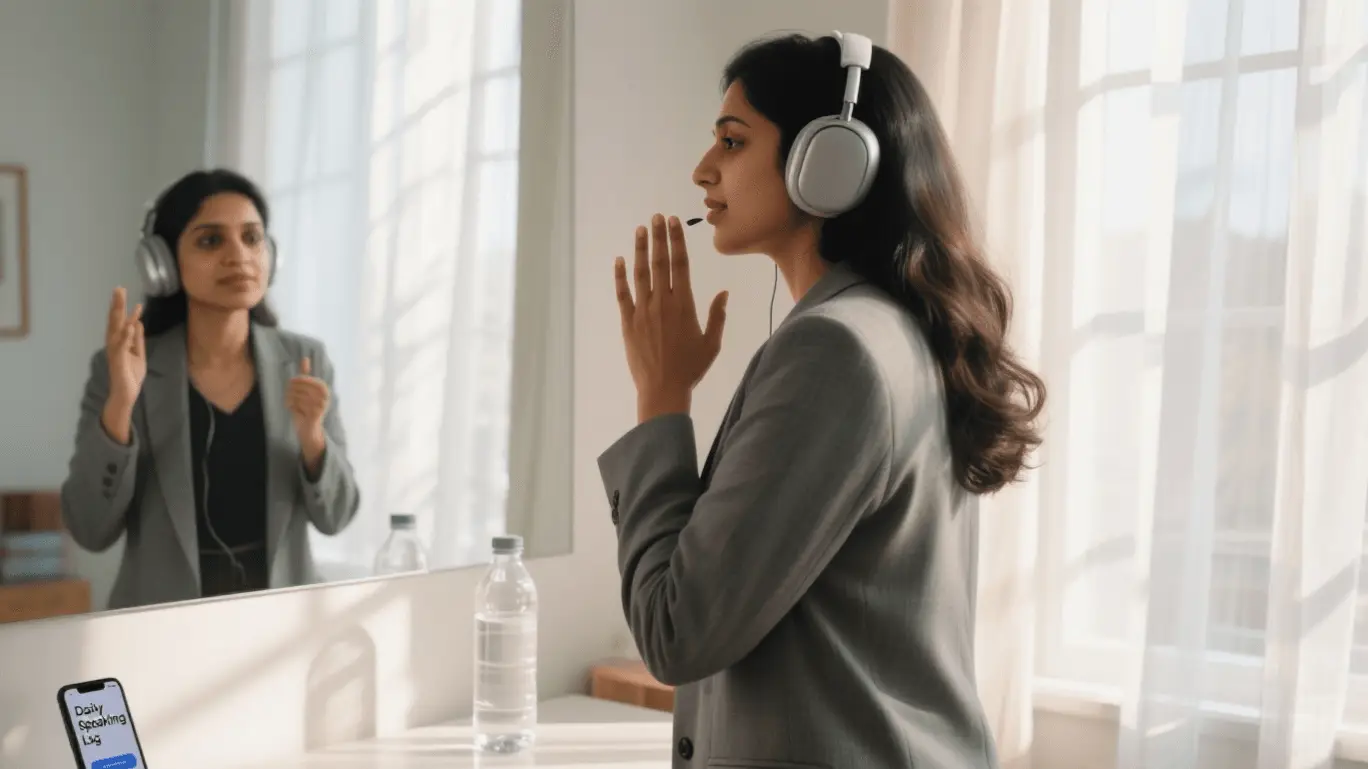
Let's take the example of Ana, a Spanish speaker who moved to the U.S. for work. Despite having a strong academic foundation in English, Ana found herself hesitating during meetings and social interactions. Her turning point came when she committed to 20 minutes of daily speaking practice using a language exchange app. Within two months, she noticed a dramatic improvement in her ability to express herself clearly and speak confidently.
This kind of transformation is not uncommon. Many learners find that consistent practice—whether through conversation clubs, language partners, or even self-talk—helps them internalize grammar patterns, idioms, and pronunciation naturally. The key is real-life language use, where you're not just memorizing rules, but applying them in context.
According to data from language learning platforms like Duolingo and Babbel, learners who engage in daily speaking practice show a 30–40% increase in fluency metrics within six months. These metrics include response time, vocabulary recall, and grammatical accuracy.
For instance, a 2023 study by the Center for Language Acquisition Research found that participants who practiced speaking daily were 2.5 times more likely to reach B2 fluency (upper-intermediate) than those who practiced only once or twice a week. This supports the idea that frequency—not just intensity—plays a crucial role in achieving English fluency.
To make the most of your daily speaking practice, consider incorporating the following conversational English tips into your routine:
These strategies are not just tricks—they're tools that help you internalize spoken English. For example, shadowing native speakers trains your ear and mouth to produce sounds accurately, while thinking in English reduces the mental lag between comprehension and response. Over time, these conversational English tips become habits that support English fluency and enable real-life language use in any setting.
Confidence in speaking is not just about knowing the language—it's about feeling comfortable using it. One of the most effective ways to build that comfort is through daily speaking practice. When you speak every day, even for just 10–15 minutes, your brain becomes accustomed to the rhythm and structure of spoken English.
Psychologically, routine practice reduces the fear of making mistakes. As you become more familiar with how to speak confidently, you begin to view errors as learning opportunities rather than setbacks. This shift in mindset is crucial for long-term progress.
Staying consistent with daily speaking practice can be challenging, especially when progress feels slow. Here are a few strategies to help you stay motivated:

Mastering conversational English is not about perfection—it's about persistence. By embracing daily speaking practice, you can transform your ability to speak confidently and engage in real-life language use. Whether you're preparing for a job interview, making friends, or simply improving your communication skills, the path to English fluency is paved with consistent, meaningful practice.
So, ask yourself: Are you ready to stop just learning English and start living it? With the right conversational English tips and a commitment to daily practice, fluency isn't just possible—it's inevitable.
Disclaimer: The content provided in this article about How to Master Conversational English Through Daily Practice is for informational purposes only and does not constitute professional advice. Readers should consult with qualified professionals before making any decisions based on this information. The author and publisher disclaim any liability arising from the use of this content.
James Thompson
|
2025.09.02


