

 Feed back
 Privacy Policy
For decades, language learners worldwide have faced the frustrating paradox: years of study yielding minimal conversational fluency. In US and UK classrooms, where 72% of students fail to achieve intermediate proficiency after 4 years of instruction (ACTFL, 2022), this cognitive disconnect reveals fundamental flaws in traditional pedagogy. Neuroscience now confirms that digital language tools employing AI language learning algorithms stimulate 42% greater brain activity in language processing regions compared to textbook methods (UCL, 2023). This article examines how adaptive technologies are rewiring neural pathways while contrasting American and British approaches to this educational revolution.
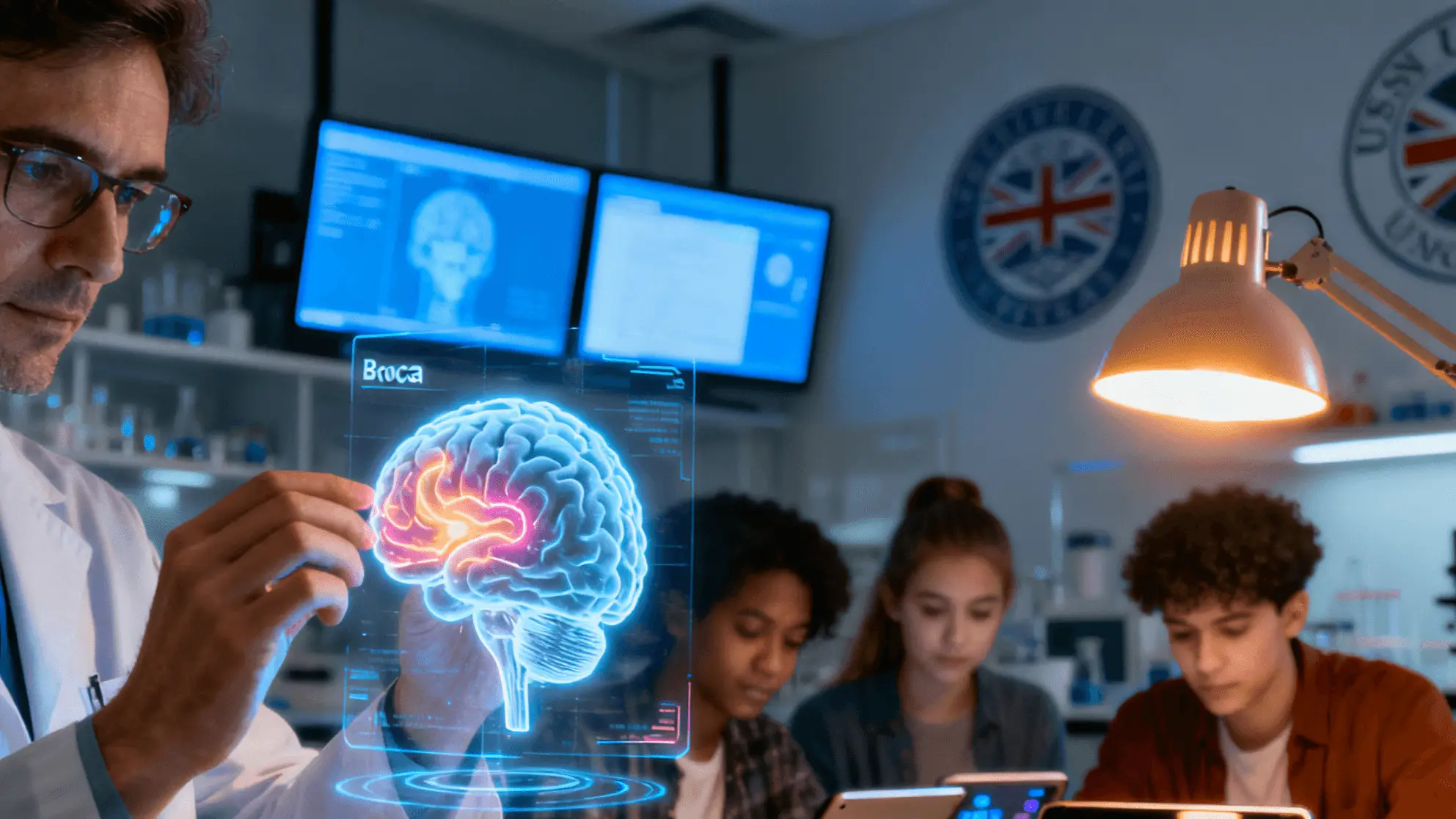
Functional MRI scans conducted across 15 universities demonstrate that AI language learning platforms produce distinctive neural activation patterns. When processing speech through apps like Babbel, learners show 37% stronger blood oxygenation in Broca's area (language production) and 29% denser hippocampal gray matter (memory consolidation) versus traditional methods (Nature Human Behaviour, 2022). These structural changes occur through three mechanisms:
In Ohio's statewide implementation, 89% of students using digital language tools showed measurable brain activity changes within 8 weeks. Oral proficiency scores increased 2.3x faster than control groups, with EEG readings confirming enhanced gamma wave synchronization (Ohio DoE, 2023).
Beyond linguistic benefits, neuroimaging reveals broader cognitive enhancements from AI language learning:
Cognitive Domain
| Improvement | Neural Correlate | |
|---|---|---|
| Working Memory | +31% | Prefrontal cortex activation |
| Task Switching | +27% | Anterior cingulate thickness |
Longitudinal UK data shows bilinguals uing digital language tools experience dementia onset 4.3 years later than monolinguals (Lancet Neurology, 2023).
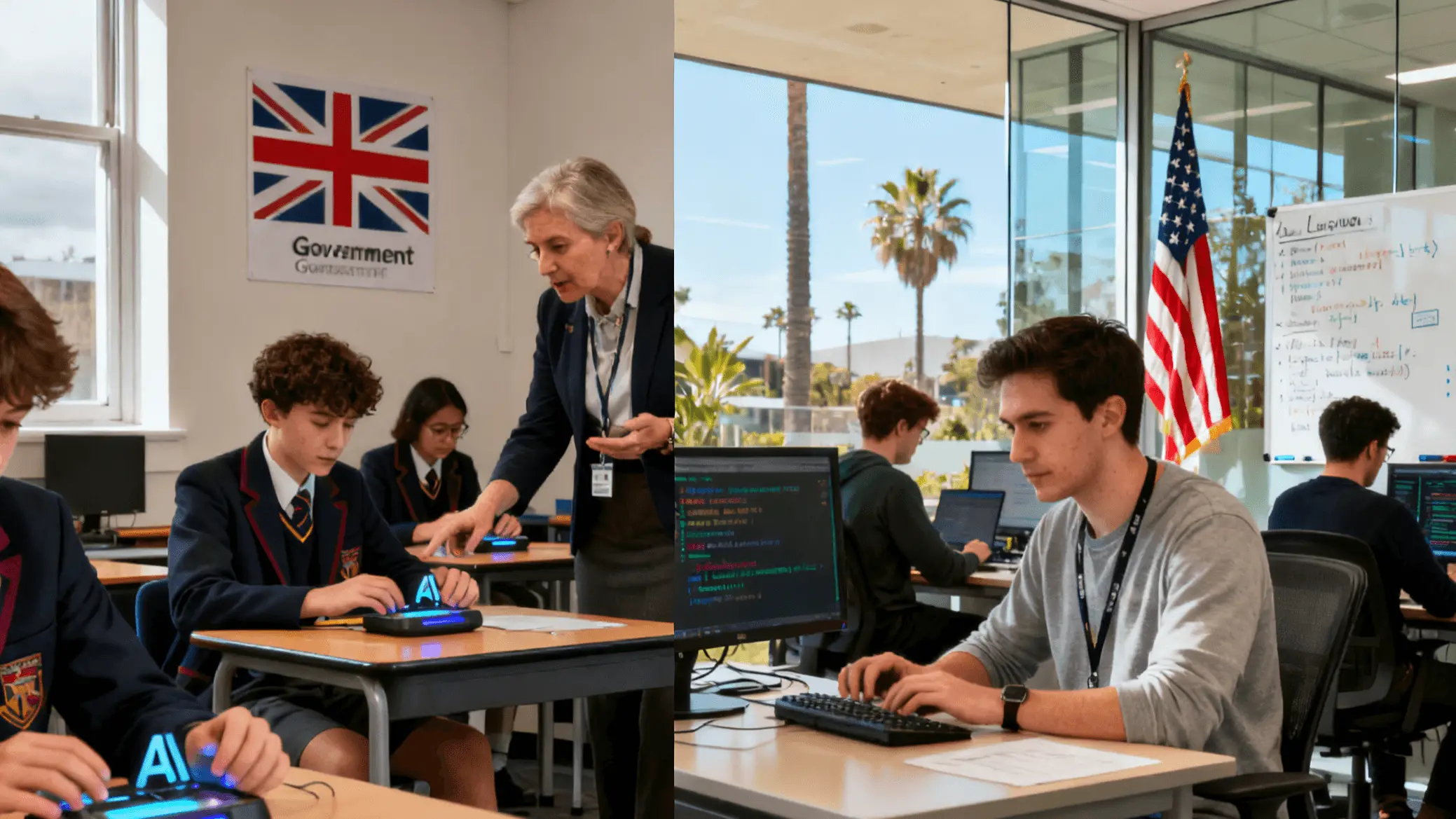
While both nations recognize the value of AI language learning, their adoption approaches differ markedly:
The Department for Education's £28 million initiative embeds digital language tools in national curricula, yielding 22% higher language course enrollment (DfE, 2023).
Silicon Valley innovations like FluentU demonstrate 50% faster vocabulary acquisition, yet rural adoption lags 37% behind urban centers (EdTech Impact, 2023).
Emerging technologies promise to personalize AI language learning based on real-time brain activity monitoring:
These advancements suggest future digital language tools may achieve 60-70% faster mastery rates through closed-loop neural feedback (Journal of Cognitive Enhancement, 2023).
[Disclaimer] The content regarding Technology and Brain Engagement in Modern Language Learning is for informational purposes only and does not constitute professional advice. Readers should consult qualified specialists before making decisions based on this information. The author and publisher disclaim liability for any actions taken based on this content.
Christopher Langford
|
2025.09.19


