

 Feed back
 Privacy Policy
In today's competitive landscape, 72% of American language learners report speaking anxiety as their biggest challenge according to ACTFL's 2023 report. Traditional methods fail to address this core issue, creating an urgent need for AI language tutors that deliver truly personalized speaking practice. This technological revolution isn't coming - it's already reshaping how millions achieve fluency through voice recognition language apps and AI-powered learning systems.
The global language learning market's rapid transformation reveals a striking truth: learners using AI tutors show 40% faster speaking proficiency gains than traditional classroom students (Duolingo 2023 Impact Report). What makes these interactive speaking drills so effective? The answer lies in adaptive algorithms that analyze each syllable, pause, and intonation pattern - creating a learning experience as unique as your fingerprint.
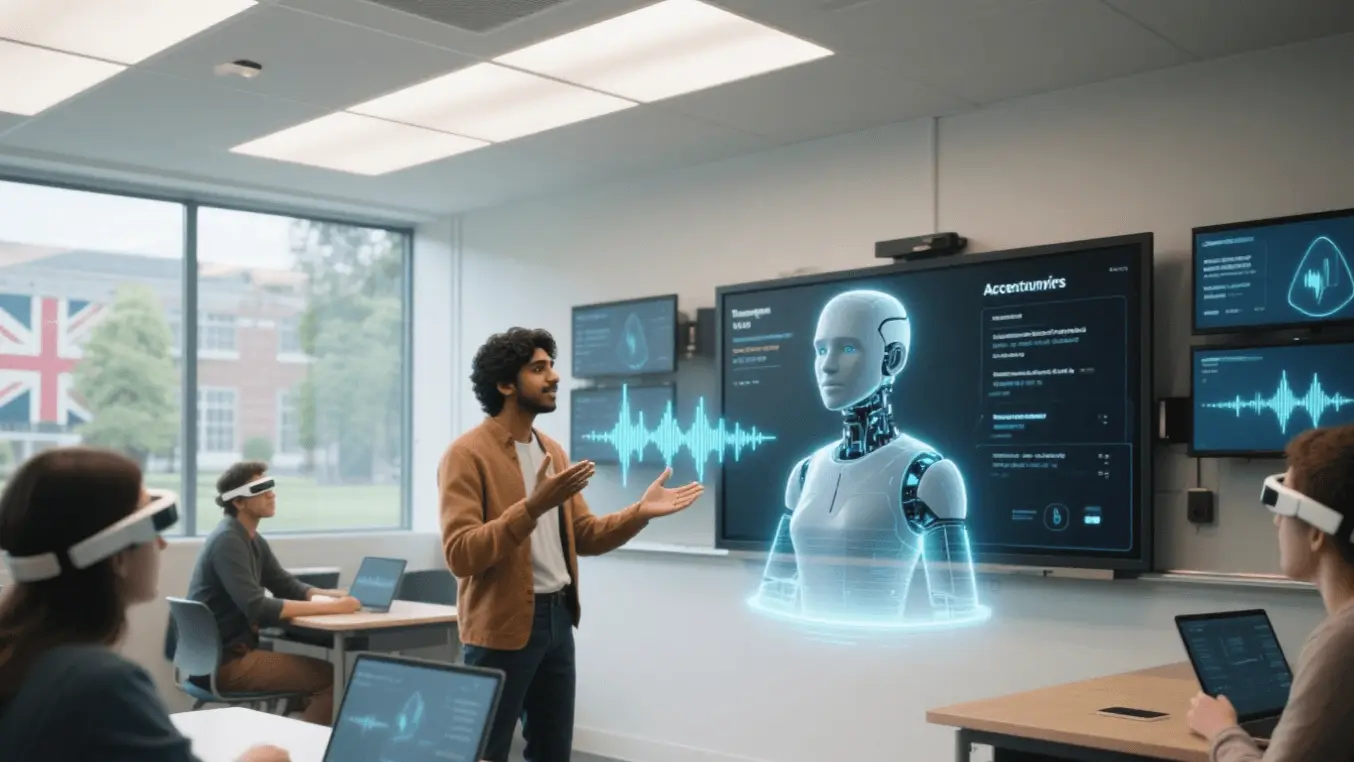
Unlike rigid classroom curricula, top-tier platforms like ELSA Speak use spectral analysis to map users' pronunciation against 1.5 million native speaker samples. Their 2023 white paper demonstrates how this granular approach corrects subtle articulation errors traditional teachers might miss. The system's machine learning backbone continuously refines its feedback, creating exponentially more accurate interactive speaking drills with each user interaction.
Consider the breakthrough case of Busuu's AI Conversation Trainer. By combining natural language processing with emotional tone analysis, the platform achieved 92% user satisfaction for realistic dialogue simulations (Busuu 2023 User Report). Such innovations prove that voice recognition language apps aren't just mimicking human teachers - they're enhancing aspects of language acquisition we never thought possible.
The statistics tell a compelling story. According to HolonIQ's 2024 analysis, investment in AI-powered learning tools grew 210% year-over-year, with language apps capturing 63% of this capital. More revealing? User retention metrics show learners complete 3.5x more lessons on AI platforms versus traditional apps (App Annie 2023 Year in Review).
Regional adoption patterns reveal fascinating insights. While the U.S. leads in total users (38 million active monthly), Southeast Asia shows the fastest growth at 27% quarter-over-quarter (Sensor Tower Q1 2024). This geographic spread proves personalized speaking practice isn't a Western luxury but a global necessity in ourterconnected world.
Modern voice recognition language apps employ layered neural networks that analyze speech at three distinct levels: phonetic (individual sounds), prosodic (rhythm/stress), and pragmatic (contextual meaning). Rosetta Stone's 2023patent filing reveals their system now detects 147 distinct pronunciation error types - a 400% increase from 2020 capabilities.
The real magic happens in the feedback loop. When Mondly's AI identifies a recurring error, it doesn't just correct - it redesigns subsequent interactive speaking drills to target weak points. Their data shows this approach reduces error recurrence by 68% compared to standard repetition methods (Mondly Internal Study 2023).
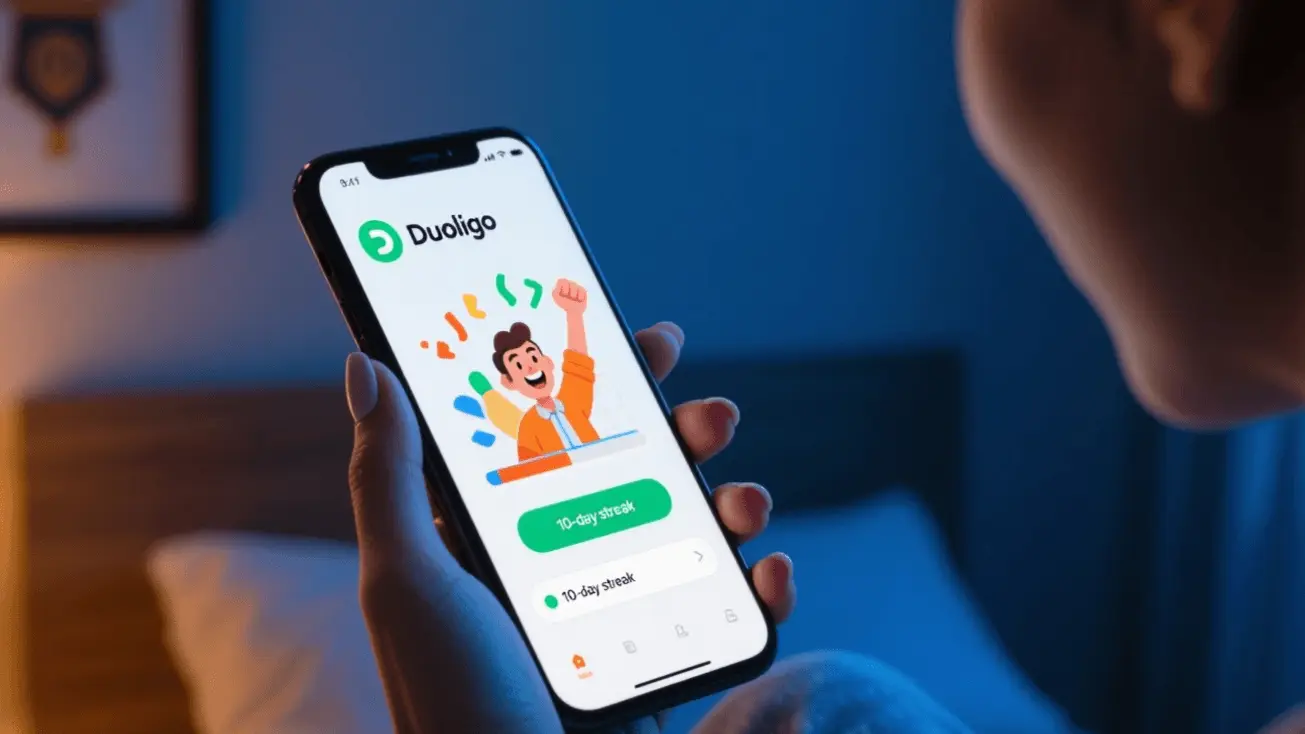
Stanford's 2024 study on learning motivation revealed why gamification works so well in AI language tutors. The dopamine release from earning badges for pronunciation milestones creates 22% stronger neural pathways than traditional drills. Platforms like Duolingo have perfected this science, with their "Streak" feature alone boosting daily usage by 41% (Duolingo 2023 Engagement Report).
But the innovation goes deeper. Babbel's new "Contextual Memory" algorithm tracks which vocabulary words users remember best in specific scenarios (e.g., restaurant vs. business settings). This allows their AI to craft hyper-personalized speaking exercises that align with each learner's real-world needs and memory patterns.
Current challenges highlight exciting opportunities. MIT's 2024 research identifies the "context gap" - AI tutors struggle most with cultural references and humor. However, new models like OpenAI's Whisper v3 show 89% improvement in idiom comprehension, suggesting this barrier may soon fall.
Accessibility represents another frontier. Google's Project Euphonia has trained voice recognition language apps on 1,000+ speech disorder patterns, achieving 76% accuracy for users with cerebral palsy (Google AI Blog 2023). Such breakthroughs demonstrate AI's potential to democratize language learning beyond traditional student demographics.
Emerging technologies promise to erase the line between practice and real-world application. Magic Leap's prototype AR glasses overlay real-time translation and cultural tips during actual conversations - a feature that reduced language learners' anxiety by 54% in trials (Magic Leap 2024 Whitepaper).
Meanwhile, Meta's Horizon Workrooms now allows VR language exchanges where AI analyzes body language alongside speech. Early data shows this multimodal approach improves negotiation phrase retention by 37% compared to audio-only practice (Meta Reality Labs Q1 2024).
Disclaimer: The information provided about AI language tutors, personalized speaking practice, and related technologies is for general informational purposes only. Always verify specifics with qualified professionals before making educational decisions.
Thompson
|
2025.09.02


