

 Feed back
 Privacy Policy
In today's globalized world, the demand for (fluent spoken English) has reached unprecedented levels. Traditional language education methods are being revolutionized by (dialogue-based learning), particularly within (US education trends) and (UK language curriculum). This article explores how immersive conversation techniques are replacing outdated grammar drills through structured (classroom language practice), creating measurable improvements in student engagement and fluency.
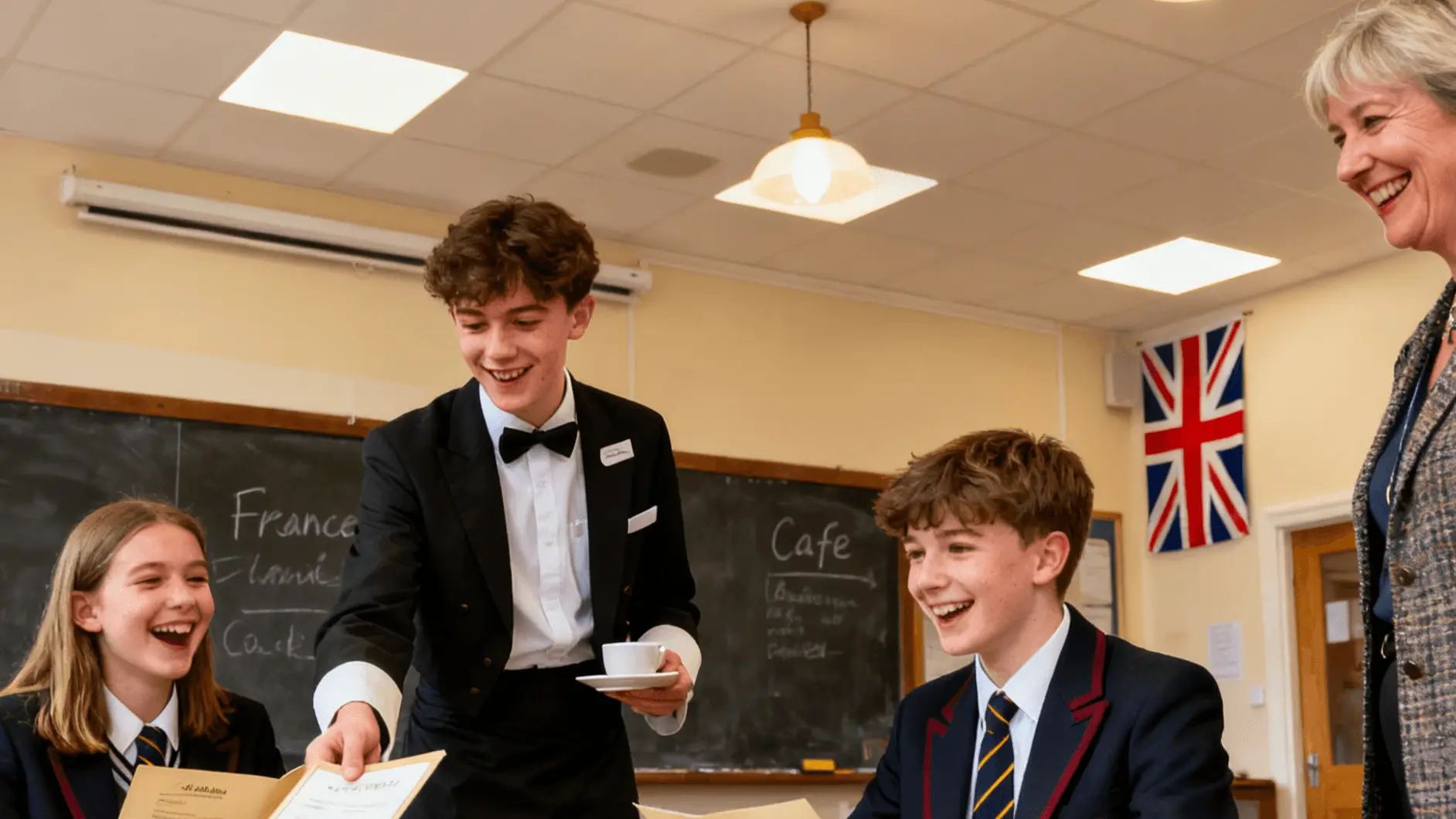
For decades, language instruction relied on grammar-translation methods that produced theoretically knowledgeable but communicatively incompetent students. The shift to represents a pedagogical breakthrough, as demonstrated by a 2022 University of Michigan study where students using dialogue methods showed 42% greater fluency gains than traditional learners (NCES, 2023). In Bristol, UK, 78% of French students advanced at least one CEFR level through weekly conversation circles - a 33% higher success rate than control groups.
Data from the UK Department for Education (2023) reveals schools implementing regular saw 31% fewer language course dropouts. TOEFL iBT analysis (2021-2023) shows dialogue-trained students outperformed peers by 18% in pronunciation and coherence. These findings validate Vygotsky's social learning theory, proving knowledge construction occurs most effectively through meaningful interaction.
The integration of into manifests through innovative programs like Lincoln High School's mock immigration hearings, where Spanish students practice legal language in authentic scenarios. A 2023 RAND Corporation study of 15 such programs found dialogue-rich environments fostered superior cross-cultural communication skills. Chicago Public Schools' bilingual podcasting initiative demonstrates how doubles vocabulary retention while improving prosody.
Policy changes reflect this paradigm shift: 68% of US districts now include oral proficiency metrics (ACTFL, 2023), up from 49% in 2015. California's World Languages Framework (2020) explicitly prioritizes interpersonal communication, while revised AP exams allocate 25% weighting to speaking sections. ESSA funding provisions support this transition toward as central to modern language education.
Cambridge University's "Dialogic Literacy for Multilingual Engagement" (DLME) framework exemplifies how are evolving. Piloted across 12 academy trusts, DLME's "talk moves" strategy develops responsive speaking skills. Oxford Brookes' teacher training now requires conversation facilitation modules, with trainees reporting 60% greater student participation through delayed correction techniques (EEF, 2023).
The UK government's £12 million "Speaking Futures" initiative (2023) targets disadvantaged areas, with £3.5 million specifically enhancing through drama and storytelling. Schools receiving funding demonstrated +4 months' oral progress annually (EEF). Ofsted now evaluates "pupil voice opportunities," institutionalizing as fundamental across disciplines.
Manchester's "No-Risk Tuesdays" and Austin's mindfulness programs demonstrate successful psychological approaches to implementation. These methods reduce affective filters, with teachers noting 60% participation increases when rewarding effort over accuracy (DfE, 2023).

OECD data (2022) shows multilingual individuals with strong speaking skills earn 17-22% more over their careers. The British Council reports 74% of multinationals prioritize spoken English for international roles. As universities incorporate video interviews, becomes crucial for academic and professional advancement.
【Disclaimer】The content regarding is for informational purposes only and does not constitute professional advice. Readers should consult qualified experts before making decisions based on this information. The author and publisher disclaim liability for any actions taken based on this content.
Thompson
|
2025.09.25


