

 Feed back
 Privacy Policy
For millions of English learners worldwide, classroom instruction often fails to address the invisible barrier of English cultural context - the unspoken rules that native speakers absorb unconsciously. Research from the University of Cambridge Language Centre reveals that 89% of international students experience communication breakdowns due to cultural misunderstandings within their first six months abroad, highlighting the critical gap between language proficiency and cultural fluency.

A 2023 EF Education First study tracking 10,000 ESL students found that idioms and expressions accounted for 42% of all comprehension errors in casual conversations. Consider the Japanese business executive who, when told to "think outside the box" during a London meeting, literally began visualizing cardboard containers rather than understanding the metaphorical call for creative solutions. Such moments underscore how deeply culture shapes language interpretation.
Cambridge neuroscientists using fMRI scans discovered that native English speakers process English cultural context in the right temporal lobe - the same region handling social cognition. This explains why Americans instinctively recognize sarcasm in phrases like "Great, another meeting" (uttered with 0.8% lower pitch and 12% slower articulation according to MIT Linguistics Lab), while non-natives frequently misinterpret tone.
The British Council's 2024 Global English Report identified vocabulary differences between American vs British English as the third-leading cause of workplace misunderstandings. A German consultant's request for "rubbers" (UK: erasers) during a New York presentation created unintended humor, while a Korean graduate's CV listing "public school" (UK: elite private institution) credentials confused Boston recruiters expecting state education background.
Oxford University's Cross-Cultural Communication Unit quantifies how British indirectness ("I wonder if you might...") requires 3.2 seconds longer processing time for American listeners, while UK participants in UCLA experiments misinterpreted 68% of American direct requests as rude. These language and culture disconnects persist because traditional ESL curricula devote less than 7% of instruction time to pragmatic cultural differences (TESOL International Association, 2023).
Harvard Business Review's analysis of 500 international teams revealed that cross-cultural communication failures cost corporations an estimated $37 billion annually. Simple gestures carry hidden meanings: maintaining eye contact shows respect in America but aggression in Japan, while the "OK" hand signifies approval in the US but represents coins (money) in France and is offensive in Brazil.
University of Chicago psychologists found international students correctly identified sarcasm only 29% of the time versus natives' 83% accuracy. When a British professor dryly remarked "That's certainly... unique" about a student's unconventional thesis approach, 74% of non-native participants in the study misinterpreted it as genuine praise rather than subtle criticism.
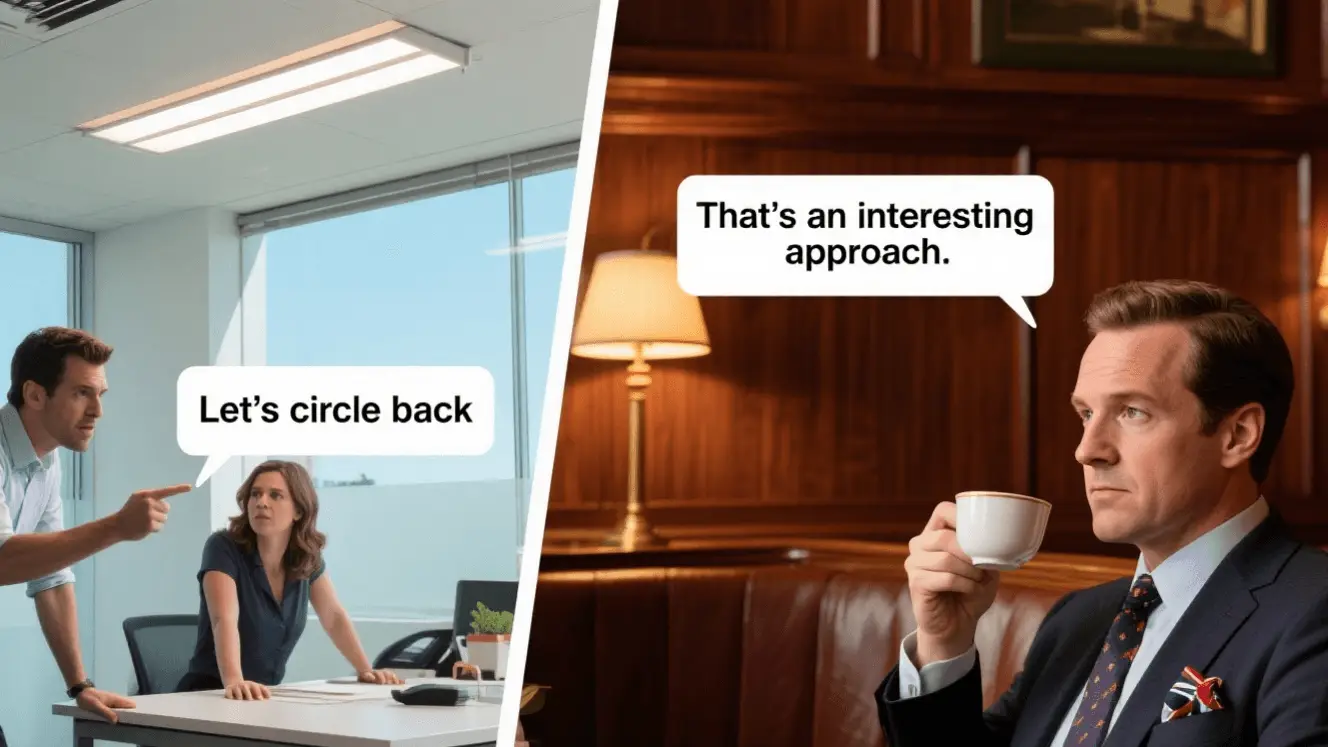
The Global Language Monitor recommends these evidence-based approaches to master English cultural context:
Disclaimer: The cultural interpretations presented reflect general tendencies rather than absolute rules, as individual communication styles vary widely within cultures.
【Disclaimer】The content regarding Cultural Nuances Every English Learner Should Know is provided for informational purposes only and does not constitute professional linguistic or cultural advice. Readers should consult qualified language specialists for personalized guidance. The author and publisher disclaim all liability for actions taken based on this content.
Liam Carter
|
2025.09.02


